
Burnout · Therapeutic photography
Therapeutic photography for burnout
By Billy Smith · 9 min read · 7 August 2026
Quick answer: therapeutic photography helps with burnout by giving an over-stretched nervous system something small, slow and voluntary to do. Taking one intentional photograph a day widens attention, lengthens the breath and restores a sense of choice — three things burnout steadily erodes. It is a supportive practice alongside real recovery (rest, reduced load, boundaries, and often professional support), not a replacement for any of them.
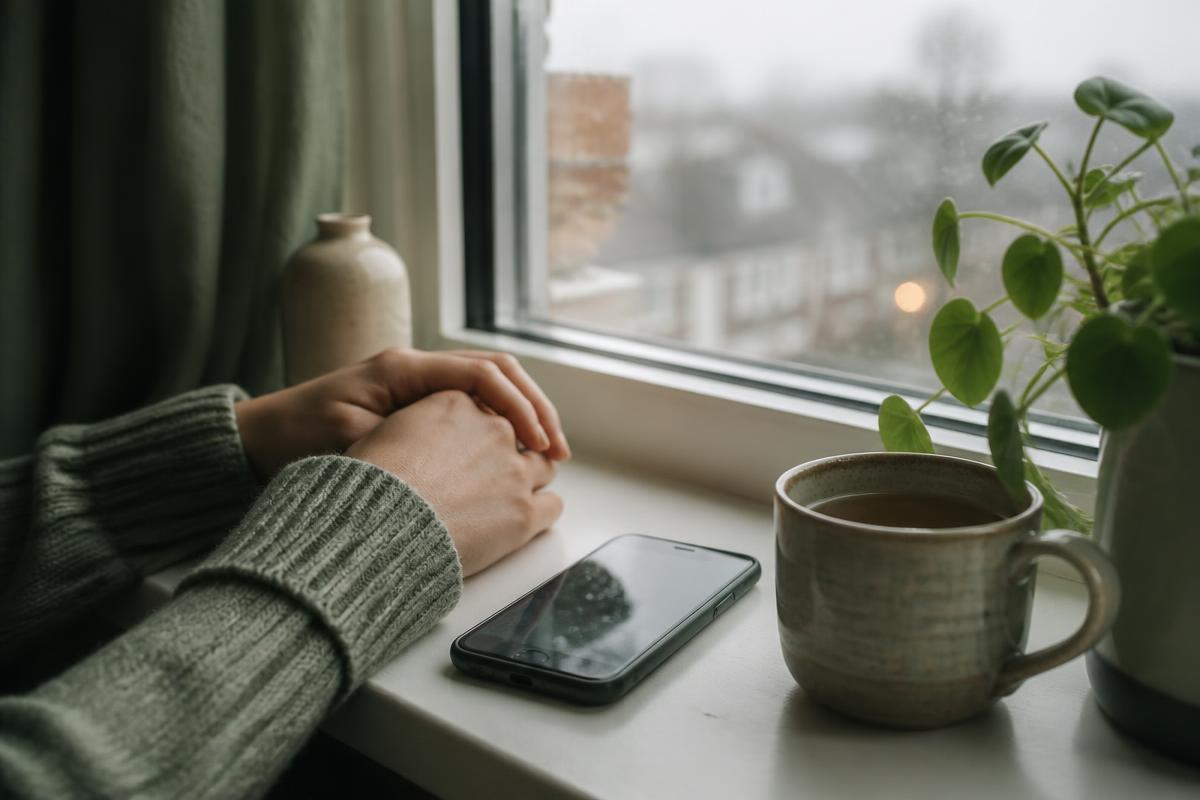
Most of the people I see in burnout have already tried resting. They took the annual leave. They went to bed earlier. They came back and felt exactly the same, which is usually the point at which people start to believe something is wrong with them.
Nothing is wrong with them. Rest fixes tiredness. Burnout is not tiredness. It is a nervous system that has been running on high alert for so long that it has forgotten how to come down — and lying still does not teach it. What tends to help earlier is something small, external and chosen. For a lot of people, a camera does that job unusually well.
Why burnout resists the usual advice
Burnout has a recognisable shape. In the clinical literature it is measured across four pillars: exhaustion, mental distance from your work, loss of emotional control, and loss of cognitive control. You can see the same pattern in everyday terms — you are shattered, you have stopped caring, you snap or cry at things that would not normally touch you, and your thinking has gone foggy.
Two features of that state explain why so much standard advice bounces off:
- Attention has narrowed. Chronic stress collapses your field of view down to threats and tasks. Advice to "be present" fails because the present, as your attention currently defines it, is only made of demands.
- Agency has gone. Burnout is strongly associated with feeling controlled — by workload, by other people's needs, by a calendar you did not build. Being told to meditate adds one more thing you are supposed to be doing.
Anything that helps has to widen attention without demanding effort, and hand back a choice without adding a chore. That is a narrow gap, and therapeutic photography fits through it.
What therapeutic photography actually is
Therapeutic photography is the intentional use of taking, choosing and reflecting on photographs to support emotional wellbeing. It is self-directed. There is no facilitator, no group, and nothing to submit.
It is distinct from phototherapy, which is delivered by a qualified therapist inside a clinical relationship. The two are often confused, including in search results. Phototherapy is a treatment; therapeutic photography is a practice you own.
It is also distinct from photography as a hobby. The practice is not about making a good image. You will not edit these photographs, post them, or show them to anyone. Judging them defeats the mechanism entirely.
Why it works for burnout specifically
Four things happen when you lift a phone to photograph something with intention, and each maps onto part of what burnout has damaged.
It triggers orienting
Moving your eyes across a space and landing deliberately on one point is called orienting, and it is one of the nervous system's built-in ways of confirming safety. A burnt-out system has largely stopped doing it — the gaze goes flat and defocused, or locks onto a screen. Framing a shot forces the eyes to move and settle. The message is simple: I am here, and I can choose where to look.
It widens attention without effort
You cannot decide to stop scanning for threat. But you can be given a different, harmless job. Looking for the shape of the light in a room quietly overrides the narrow threat-focus that exhaustion produces, without you having to argue with your own mind about it.
It returns a small piece of agency
Choosing what to frame is a real decision, made by you, with no consequences. After months of feeling that every choice belongs to someone else, an inconsequential choice is not trivial — it is practice.
It works when words have gone
Burnout takes language away. People arrive unable to say what they feel beyond "I'm just done." A photograph of your hands, or the view from the chair you have been sitting in all week, can carry that before you can phrase it. It does some of the work of naming a feeling, which reliably lowers its intensity, but through images rather than sentences.
A four-week practice for burnout
This is deliberately unambitious. Burnout recovery is undermined more by abandoned plans than by slow ones. Two to five minutes a day. Skipped days are part of the design.
Week one — just look
One photograph a day of anything you notice. No theme, no standard. The only rule is that you stop, take three slow breaths first, and take one shot rather than twelve. The goal for this week is not insight. It is establishing that you are allowed to pause.
Week two — follow the light
Each day, photograph light rather than objects: a sunbeam on the floor, a lamp warming a corner, the sky in a window. Tracking light asks the eyes to move smoothly across a scene, which is a gentle regulation exercise in its own right, and it gives the practice a shape so you are not standing in the kitchen wondering what to shoot.
Week three — how it feels, without your face
Take one image a day that represents your current state, with no self-portrait. Your hands. Your feet on the floor. The cold cup you forgot about. The unopened post. This is where the practice starts to tell you things — most people find a pattern by day four, and it is usually a pattern they already half-knew.
Week four — one good thing
Before bed, use one photograph from the day of something that was, in any small way, good. Not impressive. A warm plate, a door held open, a patch of sky. Written gratitude lists tend to go stale within a fortnight; images seem to resist that, probably because each one is specific in a way a sentence is not.
At the end of the four weeks, look back through the set once. Do not curate it. Just notice what you kept photographing.
If you would rather have this handed to you a day at a time, the free 7-day photo practice gives you one prompt per day with a space to leave a short note.
Common mistakes
- Trying to make it good. The moment you assess the photograph, it becomes another performance review. Blurry is fine.
- Posting them. Sharing reintroduces audience and judgement, which is most of what burnt you out. Keep the folder private.
- Doing it on your phone's home screen. Opening the camera through a screen full of notifications will lose you before you start. Open the camera directly from the lock screen.
- Scaling it up. If it starts feeling like a project with deliverables, shrink it back to one photograph a day.
- Expecting it to fix the cause. It will not. A practice can make an unsustainable job survivable for a while, which is sometimes exactly the wrong outcome.
Where it fits in real recovery
I want to be straight about this. Therapeutic photography is a regulation practice. It helps you tolerate the recovery period and stay connected to yourself while it happens. It does not reduce your workload, repair a boundary, or resolve whatever made the job unsurvivable.
Recovery from burnout needs the load to come down — genuinely, not cosmetically — plus enough time, and usually some support. Our burnout recovery guide sets out the realistic version of that, including how long it tends to take. Alongside it, a daily two-minute practice is the thing that keeps you company while the slower changes work.
For more on the underlying mechanism, the piece on nervous system regulation and therapeutic photography goes further into the science and gives five standalone exercises.
When to get more help
This practice is appropriate for everyday stress and the early to middle stages of burnout — the frazzled, foggy, disconnected phase. It is not sufficient if you are in crisis, experiencing panic or dissociation, or having thoughts of harming yourself. In those situations please contact your GP, a qualified therapist, or emergency services.
If you are not sure where you currently sit, the 2-minute Burnout Tracker scores you across the four clinical pillars and tells you plainly what your result suggests. It takes less time than reading this section again.
Start with one photograph
Not a plan, not a folder structure, not a new app. One photograph, today, of something you would otherwise have walked past. The nervous system changes through repetition rather than intensity, and repetition only happens with things small enough to keep doing.
I post more on this on my YouTube channel — short videos on burnout recovery and nervous-system regulation. For structured support, see the Burnout Coach programme or one-to-one burnout therapy.
Frequently asked
Can therapeutic photography help with burnout?+
Yes, as a supportive daily practice. Therapeutic photography helps with burnout by interrupting the narrow, task-driven attention that exhaustion creates. Taking one intentional photograph slows the breath, restores a small sense of choice, and gives the nervous system a brief signal of safety. It does not remove the causes of burnout — workload, boundaries and recovery time still have to change — but it makes the recovery period more bearable and more consistent.
How is therapeutic photography different from just taking photos?+
The difference is intention and privacy. Ordinary phone photography is usually fast, performance-oriented and aimed at sharing. Therapeutic photography is slow, private and process-focused: you are not making an image for anyone else, you are using the act of looking to shift your state. The photograph is a by-product, not the goal.
How long does a therapeutic photography practice take?+
Two to five minutes. Short, repeated practices work far better for a burnt-out nervous system than occasional long sessions. One photograph most days will do more than an ambitious weekend project you abandon.
Is therapeutic photography the same as phototherapy?+
No. Phototherapy is delivered by a qualified therapist within a clinical relationship, using photographs as a tool inside sessions. Therapeutic photography is self-directed — you use it on your own, outside therapy, as a wellbeing practice. Both draw on the same ideas, but only one is a treatment.
Do I need a proper camera?+
No. The phone in your pocket is ideal precisely because it is always there and you already know how to use it. A dedicated camera can help some people because it creates a clearer boundary between practice and scrolling, but it is not required.
When is therapeutic photography not appropriate?+
If you are experiencing panic, dissociation, severe depression or thoughts of harming yourself, this practice is not enough on its own. Please speak to your GP, a qualified therapist, or your local emergency services. Therapeutic photography is a complement to professional care, not a substitute for it.
Related reading
Therapeutic photography and nervous-system tools
Gentle, camera-based practices and short resets that calm an over-drawn nervous system.