
Regulation · Photography
Nervous system regulation and therapeutic photography
By Billy Smith · 8 min read · 7 August 2026
When your nervous system is stuck in burnout, the usual advice can feel impossible. Breathe slowly. Meditate. Journal. Rest. The intention is good — but the body is too revved up to sit still with itself. What often helps first is not more inward focus, but a gentle, purposeful way of looking outward.
That is where therapeutic photography comes in. The camera on your phone can become a regulation tool: a way to guide your eyes, slow your breath, and remind your nervous system that the world is not only made of demands.
This article explains how nervous system regulation and therapeutic photography work together, why the combination is especially useful for burnout, and five simple practices you can try today.
What nervous system regulation means in plain language
Your nervous system is constantly scanning for safety and threat. When it detects danger, it ramps up: heart rate rises, muscles tense, attention narrows. This is the sympathetic, or fight-or-flight, response. When the danger passes, a healthy nervous system shifts back into the parasympathetic, or rest-and-digest, state.
Burnout keeps the sympathetic system switched on for too long. Over time, the body forgets how to drop back into rest. You may feel wired and tired, irritable, unable to focus, or emotionally numb. Regulation simply means restoring the capacity to move between alert and calm again.
Classic regulation techniques include slow breathing, grounding, cold water on the face, gentle movement, and orienting to the environment. The last one — orienting — is where therapeutic photography becomes unexpectedly powerful.
What therapeutic photography actually is
Therapeutic photography is the intentional use of taking, choosing, and reflecting on photographs to support mental and emotional wellbeing. It is self-directed and gentle. It is not the same as phototherapy, which is delivered by a qualified therapist in a clinical setting.
The practice is simple: use the camera you already carry to notice one thing at a time. A shadow. A texture. Light on a wall. The shape of a mug. You do not need skill, good light, or a beautiful subject. You need only a few minutes and a willingness to look slowly.
For people in burnout, the value is not the photograph. It is the moment of not-doing that the camera creates.
Why photography regulates the nervous system
Several things happen at once when you lift your phone to photograph something with intention:
- Orienting is triggered. Moving your eyes across the room and landing on a specific point is a built-in safety signal. The nervous system reads this as "I am here, and I can choose where to look."
- Attention widens. Burnout narrows attention to threat and task. Photography forces a wider, softer focus. The world expands beyond the immediate problem.
- Breath slows. Looking carefully at something requires a longer exhale. The body begins to shift from fight-or-flight toward rest without any conscious effort.
- Agency returns. Choosing what to frame is a tiny act of decision-making. After months of feeling controlled by demands, even a small choice matters.
- Words are optional. For people who feel foggy or wordless, images can express or hold what language cannot yet reach.
Together, these effects make therapeutic photography a practical nervous system regulation exercise. It is especially helpful for people who find traditional meditation frustrating because their minds refuse to quieten. The camera gives the busy mind a small job to do, and underneath that job, the nervous system begins to settle.
Five ways to regulate your nervous system with a camera
Each exercise takes between two and five minutes. Pick one that suits where you are today. Repeat it for a few days before adding another.
1. The slow pan
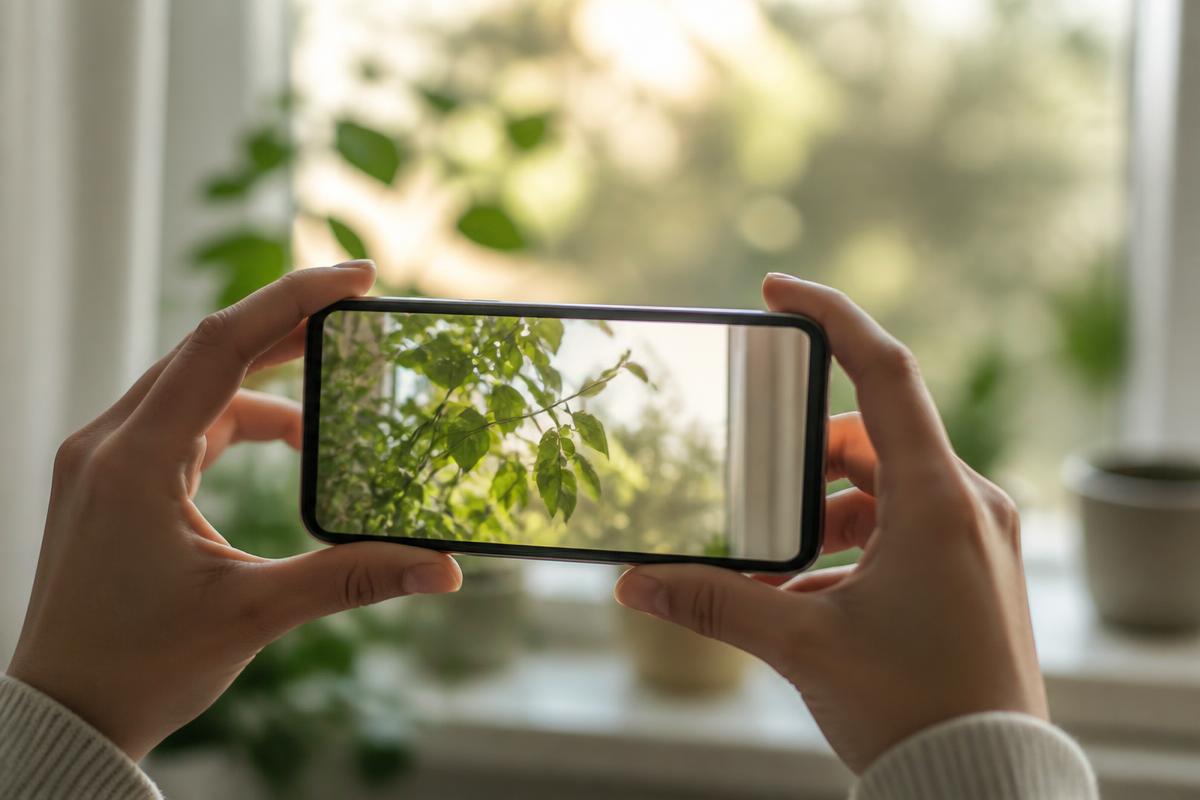
Stand or sit somewhere with a view of a window or room. Take three slow breaths. Then lift your phone and slowly pan across the space as if you were filming. After about thirty seconds, stop wherever your gaze has landed and take one photograph. This is orienting in its simplest form: your eyes move, your breath settles, your nervous system updates its map of the environment.
2. One detail, very close
Find something within arm's reach: a leaf, fabric, wood grain, the skin of a piece of fruit. Bring your phone as close as it will focus and take three or four shots from slightly different angles. Macro attention breaks the defocused, scanning gaze of chronic stress and grounds you in the present moment.
3. Follow the light
Notice where the light is falling right now. A sunbeam on the floor. A lamp warming a corner. The reflection of sky in a glass. Photograph just the light, not the object it is lighting. Tracking light teaches the eyes to move smoothly, which is itself a gentle vagal-tone exercise.
4. A self-portrait without your face
Take a photograph that represents how you feel, without including your face. Your hands on your knees. The view from your chair. Your feet on the floor. The mug in front of you. This practice does some of the work of affect labelling — naming lowers intensity — but through images instead of words. It is useful when burnout has left you unable to explain what you feel.
5. The end-of-day frame
Before bed, use one photograph of something from your day that was, in any small way, good. It does not need to be impressive. A warm plate. A door held open. A patch of sky. This is a gratitude practice in visual form, and images do not seem to habituate in the same way written lists do. The practice stays alive.
How this fits with other burnout recovery work
Therapeutic photography is not a cure for burnout on its own. It is a daily anchor that helps regulate the nervous system while the deeper work happens: rest, boundary-setting, reducing load, and, for many people, professional support. Think of it as one of the gentlest tools in the recovery kit.
If you are unsure where you sit on the burnout spectrum, the 2-minute Burnout Tracker gives you a score across the four clinical BAT pillars and clear next steps. If you want a structured version of the photography practice, the free 7-day photo practice gives you one prompt a day with a place to leave a short note.
You can also combine photography with other regulation practices. A short walk with a camera becomes bilateral stimulation and orienting at the same time. A cold drink photographed before sipping becomes a grounding cue. The camera is a bridge, not a replacement.
When to use it — and when to seek more help
Therapeutic photography is safe and useful for everyday stress, mild anxiety, and the early to middle stages of burnout. It helps when you feel frazzled, foggy, disconnected, or stuck in a spiral of thinking.
It is not enough if you are in crisis, experiencing severe depression, panic, dissociation, or thoughts of harming yourself. In those situations, please contact your GP, a qualified therapist, or your local emergency services. The practice is a complement to professional care, not a substitute for it.
If your burnout score is high, you may also find our burnout recovery guide useful. It maps out the full picture: rest, boundaries, support, and the realistic timeline for coming back to yourself.
Starting small
The nervous system changes through repetition, not intensity. One photograph a day, taken slowly, will do more than an ambitious project you abandon after a week. Keep the photos private. Do not aim for beauty. Let the practice be ordinary and small.
Your body already knows how to regulate. The camera just gives it a reason to remember.
There is more on this approach on my YouTube channel, where I talk through nervous-system and recovery ideas in short videos. If you want structure alongside it, see the Burnout Coach programme or one-to-one burnout therapy.
Frequently asked
What is nervous system regulation?+
Nervous system regulation is the body's ability to move between alert and calm states smoothly. When the nervous system is regulated, you can handle stress and then return to rest. When it's dysregulated, you may feel stuck in anxiety, shutdown, or a constant sense of threat.
Can therapeutic photography really regulate the nervous system?+
Yes, when it's done as a slow, intentional practice. Photography cues orienting, a natural process in which the nervous system checks the environment for safety. Moving the eyes, finding a point of interest, and breathing more slowly all activate the calming branch of the nervous system. It's not a replacement for therapy, but it is a powerful daily anchor.
Do I need to be good at photography?+
No. The image is not the point. The point is the act of slowing down and noticing. Therapeutic photography works with blurry snapshots, accidental framing, and ordinary subjects. You don't share them, edit them, or judge them.
How long does each practice take?+
Most practices take two to five minutes. The nervous system responds to short, repeated moments of safety far more than it does to occasional long sessions. A few minutes most days is enough.
When is therapeutic photography not enough?+
If you are experiencing panic, dissociation, thoughts of self-harm, or severe depression, please speak to a GP or mental health professional. Therapeutic photography is a supportive self-regulation practice, not a treatment for crisis or trauma on its own.
Related reading
Therapeutic photography and nervous-system tools
Gentle, camera-based practices and short resets that calm an over-drawn nervous system.