
Start here
The Recovery Starter Guide
A therapeutic photography-led recovery plan. Eight short sections, practical burnout tools, and a camera you already own. Written by a BACP-registered therapist with 15 years' clinical experience.
Not another list of things you should do. Start with what you notice through a camera, then turn it into a small recovery step. Built from what helped me recognise and recover from burnout.
One payment · 30 days of online access · PDF yours to keep · 7-day refund
In short
The Recovery Starter Guide is a £29 one-off, therapist-written therapeutic photography-led burnout self-help guide: eight camera prompts and seven recovery practices you can start the same day, read in your browser with 30 days of online access and a 7-day refund.
It's for people in the early-to-moderate stages of burnout who want something concrete to do on their own. If you want structure and pacing across eight weeks, that's Burnout Coach (£195), and the £29 you pay here comes off it. If you'd rather work with a person, therapy with Billy is £97 a session with a free 15-minute call first.
Written by Billy Smith, a BACP-registered therapist (Reg. 58598) in the UK. It isn't therapy, a diagnosis, or a substitute for medical care.
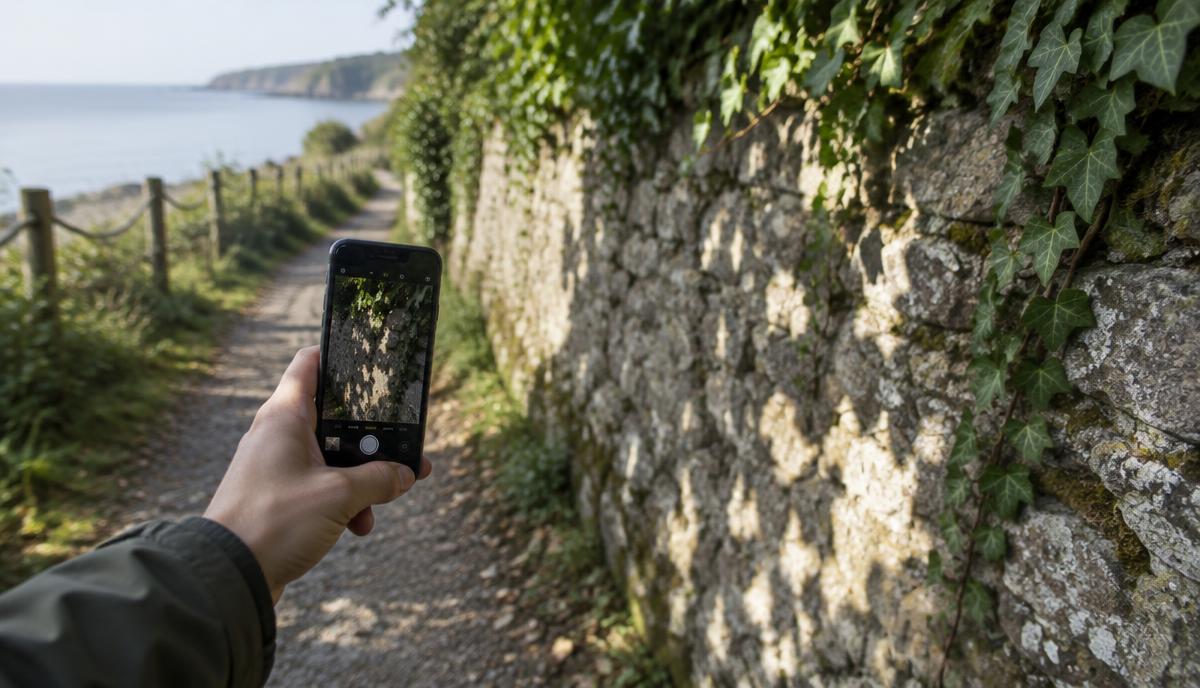
Before we start — why this is personal
In 2020, during lockdown, when we couldn't go out, I started looking at photography as a pastime. Through social media I discovered therapeutic photography. What began as an interest helped me recognise something I hadn't properly named: I was burnt out.
I used it, adopted it and took courses in it. Therapeutic photography helped me get over burnout. I put this programme together from what helped me, alongside my work as a BACP-registered therapist. That's why photography is the starting point here, not a bonus exercise at the end.
This isn't a guide to taking better photographs. It's a way to look at your experience without always having to find the words: notice what is draining you, what draws your attention and where a small change might help. Then use the practical recovery tools to act on what you notice.
Each section pairs a photograph with a recovery step: understanding burnout, settling, sleep, energy, boundaries and reconnection. Section 7 brings the approach together in a ten-minute photo walk; section 8 gives it a manageable thirty-day rhythm. The original recovery work is still here — photography gives you another way into it.
Your phone is enough. Stay indoors if that's easier, keep your photographs private, and leave technical quality out of it. One photograph and a few words can be enough; you can also look without taking a picture. Nothing here needs to become another performance.
My experience isn't a promise that yours will follow the same path. This is self-help, not therapy or medical care, and photography isn't a cure for burnout. Take what is manageable, leave what isn't, and seek support when you need it. You don't have to turn recovery into another job.
— Billy Smith, BACP-registered therapist
What's inside
In every section: notice something, make a photograph if you want to, then use a practical recovery tool. Indoors or outdoors, privately, at your pace.
1. What burnout actually is
Why willpower hasn't worked, and what is actually depleted.
Through your camera: A picture of where you are
2. Stabilise the nervous system first
The ten minutes that make everything else land.
Through your camera: One small detail, not the whole day
3. Repair sleep with one anchor
No burnout recovery survives five hours a night.
Through your camera: Find your morning anchor
4. The energy audit
Find the two or three things doing most of the damage.
Through your camera: What drains you? What steadies you?
5. One-line boundaries
A sentence you can actually say out loud.
Through your camera: A picture of enough
6. Reconnect with something that isn't useful
Recovery needs input, not only subtraction.
Through your camera: Follow one flicker of interest
7. The ten-minute photo walk
When words and writing feel like too much, pick up a camera.
Through your camera: Look back without judging
8. Your first thirty days
How to stack the practices without adding pressure.
Through your camera: Make a small visual record
Read a page free
7. The ten-minute photo walk
Through your camera
Look back without judging
- After the ten-minute practice below, leave the photographs alone for a while. Later, choose just one to look at.
- Ask 'What did I notice?' and 'What do I need?' Write a word or sentence if useful. Don't grade, edit or force a positive interpretation.
- Choose one small response: a pause, a boundary, some company or asking for support. If an image brings up distress, put it away and return to something familiar.
What you take from this: Use a photograph as a prompt for a kind, practical response — not proof that you are recovering.
You've used photographs to notice your starting point, your energy and your boundaries. This practice brings those small moments together: ten minutes of looking without an agenda. If words and writing feel like another demand, you can let the photograph be enough.
This is the method I use in my own recovery and with the people I work with: therapeutic photography. Not picture-making for anyone else — no editing, no posting, no good shots. The camera (your phone is fine) simply gives your attention a job, and attention is one of the first things burnout takes.
The aim is simple: looking closely at light, leaves or the back of a bus stop can give you a pause from going over the same thoughts. Choosing what to point at is also a small decision that belongs to you. You may notice a little more presence or interest; you may not. Neither outcome makes the practice a test you have passed or failed.
There is no right subject. If you photograph the same fence three days running, that is the practice. What matters is that you looked — really looked — for ten minutes.
Try it: The ten-minute photo walk (10 minutes)
- Take your phone (or any camera). Step outside if you can, or stay by a window, at a table or in a chair. A walk is optional — noticing is the practice.
- For ten minutes, photograph anything your eye stops on: colour, shape, shadow, texture. Don't review the pictures as you go.
- Two rules: no people, and nothing you'd post. This is for you, not for an audience.
- When the ten minutes are up, stop. Don't edit, don't share, don't judge them.
- Do it three times this week. It pairs naturally with the ten pointless minutes from section 6.
That's one of eight photography-led sections. The others connect what you notice with settling, sleep, energy, boundaries, reconnection and your first 30 days.
"It has helped me understand that burnout isn't simply about being tired or needing more sleep… I particularly liked how the guide breaks everything down into small, manageable steps without making recovery feel like another overwhelming responsibility. It's reminded me that needing rest doesn't make me weak, that I don't have to do everything… I'm still at the beginning of my journey, but this guide has given me a better understanding of where I am and a starting point for finding myself again. I'd definitely recommend it to anyone feeling overwhelmed, emotionally drained or struggling to feel like themselves."
Who it's for
People who are tired in a way sleep doesn't fix, who have started to feel flat about work they used to care about, and who want something concrete to do about it this week.
If your assessment came out High, please speak to your GP or a therapist first. Self-help is not the right first step at that level.
Why I wrote this
Photography helped me recognise my burnout and recover from it. I don't want to hand you another generic list of things to do. I want to give you a way to notice what is happening, and a practical step you can take with that information.
Start here if you want to work at your own pace. For daily structure across eight weeks, there's Burnout Coach. The Guide stands on its own; moving on is optional.
— Billy Smith, BACP-registered therapist (Reg. 58598)
Which one do I need?
Three ways to work on burnout here, from self-directed to one-to-one. There's no wrong order — most people start with the cheapest thing that matches how much support they actually want.
Recovery Starter Guideyou're here
£29 one-off
Best if: You want something concrete to do this week, on your own.
Therapeutic photography leads eight sections, alongside seven practical burnout recovery tools. Your phone is enough. 30 days of online access and a downloadable PDF. 7-day refund.
Burnout Coach — 8 weeks
£195 one-off, or £99/month for 2 months
Best if: You want structure and pacing, not another thing to organise yourself.
Eight weeks of access from purchase: daily check-ins, weekly score tracking, a full recovery roadmap and a private journal. Buy the guide first and its price comes off this one. See Burnout Coach — 8 weeks
Therapy with Billy
£97 per 50-minute session · free 15-minute call first
Best if: You want to work with a person, weekly, on what's underneath it.
One-to-one online sessions across the UK with a BACP-registered therapist. Paid per session, no block booking. See Therapy with Billy
If your burnout score came out High, none of these is the right first step — please speak to your GP or a therapist.
Questions
What exactly do I get?
Eight photography-led sections: a camera prompt in every section, the seven original recovery practices, Billy's lockdown story and a thirty-day plan. Your phone is enough; no photography skills needed. You get 30 days of online access from purchase or code redemption and can download the PDF to keep your own copy.
Do I need a camera or photography experience?
No. Your phone is enough, and you can work indoors, from a window or from a chair. This is therapeutic photography: private noticing and reflection, not technical photography lessons. You can look without taking a picture. No editing, posting or judging the result.
Is this therapy?
No. It's the structured self-help work that usually happens between therapy sessions, written by a BACP-registered therapist. It isn't a diagnosis and it isn't a substitute for therapy or medical care.
How is this different from the free week?
The free week is five daily emails covering the first practice. The guide brings together Billy's own burnout story, what burnout is, sleep repair, the energy audit, boundaries, reconnection, therapeutic photography and a thirty-day plan — in one place you can re-read.
What if it doesn't help?
Email billy@burnoutrecoveryhelp.com within 7 days and you get a full refund. No forms, no explanation needed.
What if I want the full programme later?
You get your £29 back as credit. Inside the guide there's an upgrade to Burnout Coach — the eight-week programme — for £195 minus what you paid here, so you never pay twice.
How much does the burnout recovery guide cost?
£29, paid once in GBP. There is no subscription and no upsell inside the guide beyond the optional upgrade to the eight-week programme, which credits back what you paid here.
Should I buy the guide or the eight-week Burnout Coach?
Buy the guide (£29) if you want to read and act at your own pace. Choose Burnout Coach (£195, or £99 a month for two months) if you want day-by-day structure, weekly score tracking and a recovery roadmap. Starting with the guide costs you nothing extra — its price comes off the programme.
Do I need to take the burnout assessment first?
No, but it helps. The free assessment takes about three minutes and tells you which of the three burnout patterns is loudest for you, so you know which sections of the guide to start with.
Who wrote it?
Billy Smith, a BACP-registered therapist (Reg. 58598) working online across the UK, who has come through burnout himself. The guide draws on the Burnout Assessment Tool framework used in the assessment on this site.
Can I get it if I'm outside the UK?
Yes. It's a web guide in English, readable anywhere, and it is charged in GBP — your bank converts at their rate. The safety guidance points to UK services, so use your local crisis lines if you need urgent help.
Want the full eight-week programme instead? Burnout Coach is £195. Buy the guide first and the £29 comes off that price.
Free reading before you decide
The free guides behind the programme — read these first, then decide if a structured plan would help.